


Halloween is one of the most pet-hazardous nights of the year — not because of any single major danger, but because of the sheer volume of smaller risks happening all at once: candy within reach, a steady stream of strangers at the door, costumes, and general household chaos. A little preparation goes a long way toward a safe night for your pet.
Candy Hazards
Chocolate
Halloween means chocolate in volumes most households don’t normally have lying around. Dark and baking chocolate are most dangerous, but even milk chocolate in large quantities poses a risk. Keep all candy bowls and trick-or-treat bags completely out of reach. Countertops and low tables don’t count as out of reach for most dogs.
Xylitol
Sugar-free candies and gums are increasingly common, and xylitol is extremely toxic to dogs even in small amounts. Read labels on anything sugar-free before assuming it’s a safer option.
Wrappers and Foreign Objects
Beyond the candy itself, wrappers, sticks (from lollipops), and small toys sometimes included in trick-or-treat bags pose choking and intestinal blockage risks. A dog that’s eaten a significant volume of wrapped candy may need veterinary attention for the wrappers alone, regardless of the candy’s toxicity.
The Front Door Problem
A steady stream of costumed strangers ringing the doorbell and knocking repeatedly is stressful for many pets and creates real escape risk as the door opens and closes throughout the evening.
- Consider keeping anxious or escape-prone pets in a separate room, away from the front door, for the evening
- Ensure your pet has secure identification — collar tags and an up-to-date microchip registration — in case they do slip out
- If your pet is sociable and enjoys greeting trick-or-treaters, keep them on a leash near the door rather than loose, to maintain control
Costume Considerations
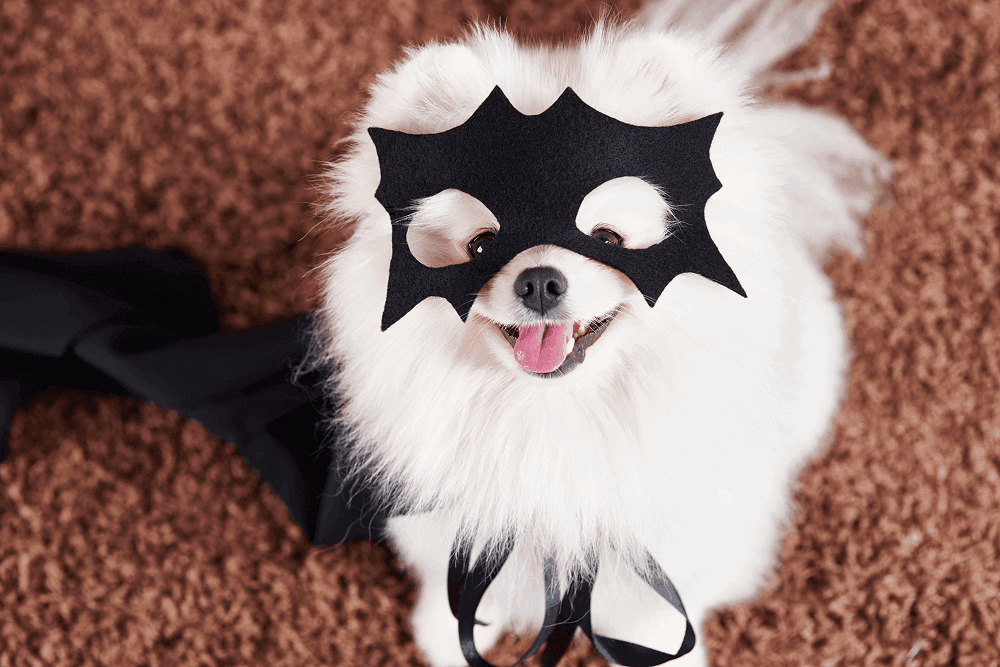
If you dress up your pet, prioritize comfort and safety over the perfect photo:
- Make sure the costume doesn’t restrict breathing, vision, movement, or the ability to bark or meow normally
- Avoid small attachable pieces that could be chewed off and swallowed
- Do a trial run before the actual day. If your pet seems stressed or tries repeatedly to remove the costume, it’s not worth forcing for the evening
- Watch closely for signs of overheating or distress throughout the night, especially with multi-layer costumes
Decorations to Watch
- Candles and jack-o-lanterns. Curious pets and open flames are a bad combination; consider battery-operated alternatives
- Glow sticks and glow jewelry. The liquid inside isn’t highly toxic but causes significant drooling and discomfort if chewed
- Fake spider webs and small decorative items has ingestion risk for pets who like to chew or investigate new objects
Managing Halloween Anxiety
Some pets find the entire evening — doorbell, costumes, unfamiliar voices — genuinely stressful. Signs include hiding, excessive panting, pacing, or vocalizing. For anxious pets:
- Provide a safe, quiet space away from the front door with familiar bedding
- Consider background noise (TV or music) to mask the doorbell and outdoor activity
- Talk to your vet ahead of time if your pet has a history of significant noise or stranger-related anxiety. There may be helpful options worth discussing before the night arrives
What to Do If Your Pet Gets Into Candy
If you discover or suspect your pet has eaten Halloween candy, identify what and how much as best you can, and call your vet or an urgent care clinic right away rather than waiting to see if symptoms develop, particularly for chocolate or anything sugar-free.
Conclusion
Halloween hazards for pets are rarely about one big danger. It’s the combination of candy, stress, and a chaotic evening that adds up. A secured candy stash, a quiet space for anxious pets, and some attention to costume safety will keep the night fun for everyone, including your pet.
Pet gotten into Halloween candy or having a rough night?
Fredericton Veterinary Walk-in & Urgent Care is open until midnight,
7 days a week.