


Hot spots on dogs have a talent for appearing overnight and doubling in size by morning. One day, your dog’s coat is fine; the next, there’s a weeping, matted, intensely uncomfortable patch of raw skin and your dog cannot stop making it worse.
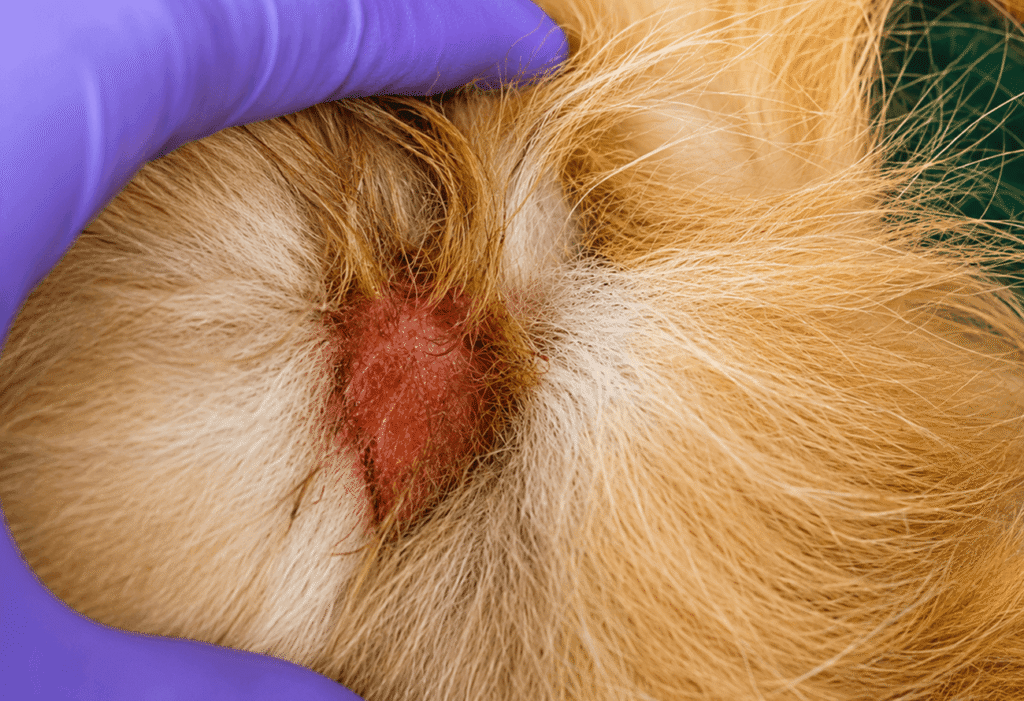
Hot spots (technically called acute moist dermatitis) are one of the most common summer skin conditions in dogs and one of the most frustrating to manage at home without knowing what you’re doing. This guide covers why they happen, what to do, and, critically, what not to do.
What Is a Hot Spot?
A hot spot is a localized area of inflamed, infected skin that develops when a dog scratches, licks, or chews a spot intensely enough to break the skin surface. Bacteria colonize the raw area, the infection spreads rapidly under the matted fur, and the cycle of itch-scratch-damage accelerates.
They are most common in summer because heat and humidity create ideal conditions for bacterial growth, and because triggers like allergies, flea bites, and wet coats are more prevalent in warm weather.
What Causes Hot Spots on Dogs?
Hot spots always start with something that made the skin itch or irritate in the first place. The most common triggers are:
- Moisture trapped in the coat — the #1 trigger. A dog that swims frequently and isn’t dried thoroughly, especially around the ears and in skin folds, is a prime candidate. Always dry your dog after swimming.
- Allergies — seasonal, food, or contact — create the initial itch that starts the scratch-infection cycle.
- Flea bites — dogs with flea allergy dermatitis can develop a large hot spot from a single bite. This is why consistent year-round flea prevention matters.
- Anxiety or boredom — excessive self-licking can damage skin and introduce infection even without an underlying physical trigger.
What Does a Hot Spot Look Like?
A hot spot appears as a red, raw, moist area of skin — sometimes with a crust forming at the edges and matted fur sticking to the surface. The surrounding area is warm to the touch. Your dog will be fixated on licking, chewing, or scratching it, and the area may have an unpleasant odor from the bacterial infection.
Hot spots can appear anywhere but are most common on the head and neck area, near the ear, on the flanks, and at the base of the tail.
Home First Aid for Hot Spots
Shave the Fur Away
Hot spots are almost always larger than they appear under the coat. Shaving the area — not cutting with scissors, which risks cutting the skin if your dog flinches — allows airflow, lets you properly clean the wound, and lets you see the full extent of the problem. If the hot spot is in a hard-to-reach area or your dog is in significant distress, let the vet do this step.
Clean and Dry Gently
Clean the area with sterile saline or a mild antiseptic solution. Pat dry — do not rub. Moisture is the enemy of a healing hot spot. Keeping the area dry is critical to recovery.
Prevent Further Licking
An e-collar (cone) is the most reliable way to prevent your dog from licking the hot spot and making it worse. Without it, any topical treatment is immediately undone. Most hot spots will not heal without some form of lick prevention.
What NOT to Do
❌ Do Not Use Hydrogen Peroxide
Hydrogen peroxide damages both healthy and infected tissue, significantly slowing healing. It is not appropriate for hot spots or most pet wounds. Leave it out of the first aid kit.
❌ Do Not Use Scissors Near the Hot Spot
Scissors near an inflamed, painful area of a dog’s skin in a discomfort pose a risk of accidental cutting. Always use clippers to remove fur from around a hot spot, or have the vet do it.
❌ Do Not Cover with a Bandage
Covering a hot spot with a bandage traps moisture beneath it, creating the warm, wet environment where bacteria thrive. Hot spots need air circulation to heal, not occlusion.
When to See a Vet
See a vet if:
- The hot spot is larger than a few centimeters, or if you’re not sure of the full extent, under the coat.
- It is spreading rapidly — hot spots can double in size within hours.
- Your dog is in significant distress.
- It hasn’t improved within 24 hours of home first aid.
Most hot spots that are caught early can be managed with topical treatment. Still, larger or deeper infections typically require oral antibiotics and sometimes a short course of anti-inflammatory medication. A vet will also help identify the underlying trigger to prevent recurrence.
Hot spots on dogs are manageable when caught early and treated correctly. The key is shaving the area to assess the full extent, keeping it clean and dry, preventing licking with an e-collar, and seeing a vet if the hot spot is large, spreading, or not improving. Avoid the common mistakes, and you’ll give the skin the best environment to heal.
Contact Us
Hot spots that are spreading or not improving after 24 hours need veterinary treatment.