


Ticks are absolutely obsessed with your dog. Like, clingy to a toxic level. Literally.
Blacklegged ticks — the ones that carry Lyme disease — are well established across New Brunswick, and their range and numbers have expanded significantly over the past decade. Tick prevention for dogs is no longer something to think about only if you spend time in deep woods. Suburban lawns, parks, and trails are all active tick habitats.
This guide covers where ticks hide on your dog, how to remove them correctly, the signs of Lyme disease in dogs, and how to choose the right prevention for your pet’s lifestyle.
Tick Season in New Brunswick
Ticks in New Brunswick are active whenever temperatures are above approximately 4°C — which means they can be a concern from early spring through late fall, with peak activity in spring and early summer and a secondary peak in fall. Blacklegged ticks (deer ticks) are the primary concern for Lyme disease transmission. They are small: a nymph-stage tick is roughly the size of a poppy seed, making them easy to miss on a dark coat.
Where to Check Your Dog After Every Outing
After any time outdoors — trail walks, yard play, off-leash parks — do a thorough tick check. Ticks seek warm, hidden areas after finding a host:
- Around and inside the ears
- Between the toes and in the webbing of the paw pads
- Under the collar and around the neck
- In the groin and armpits
- Around the tail base
- Eyelids and face
Run your hands through your dog’s coat systematically. In dogs with thick or dark coats, ticks can be missed on a visual inspection alone.
How to Remove a Tick from a Dog
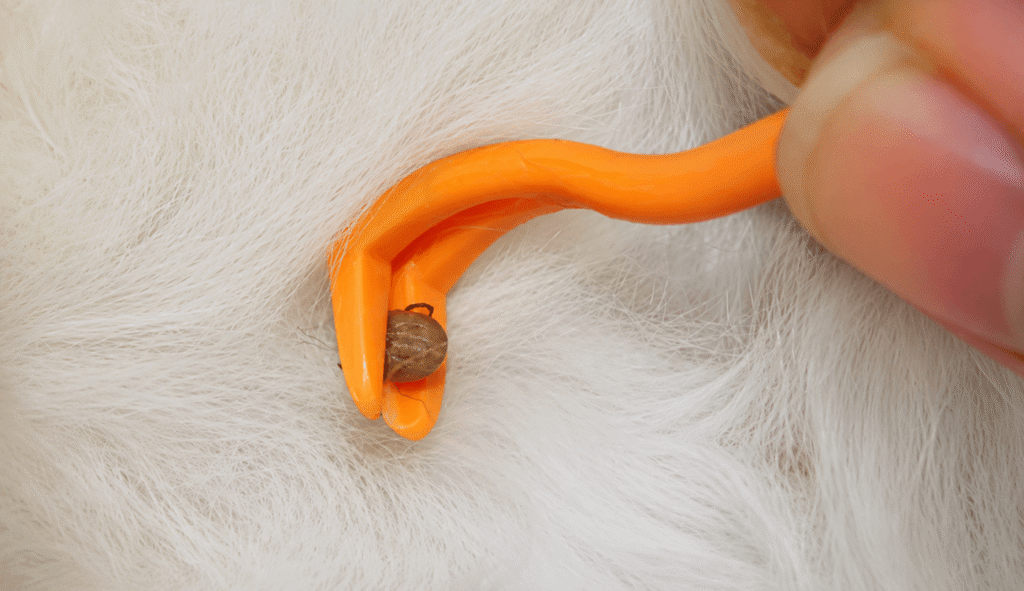
Use a fine-tipped tick removal tool or fine-tipped tweezers — not regular household tweezers, which are too wide and may crush the tick body. Grasp the tick as close to the skin surface as possible and pull upward with steady, even pressure. Do not twist or jerk.
Do not apply petroleum jelly, nail polish, heat, or any other substance to the tick. These methods are ineffective and may increase the risk of disease transmission by causing the tick to regurgitate.
After removal:
- Clean the bite area with rubbing alcohol.
- Wash your hands thoroughly.
- Save the tick in a sealed container or bag — your vet may want to test it or send it to a provincial laboratory.
- Monitor the bite site and your dog’s behavior over the following weeks.
Signs of Lyme Disease in Dogs
Lyme disease in dogs doesn’t always produce the bull’s-eye rash that sometimes appears in humans. Signs can be subtle and delayed — appearing two to five months after the tick bite:
- Shifting leg lameness — limping that moves from one leg to another. This is the most characteristic sign of Lyme disease in dogs.
- Fever, lethargy, and reduced appetite
- Swollen joints
- In serious cases: Lyme nephritis — a form of kidney disease caused by the immune response to the infection, characterized by increased thirst and urination, vomiting, and weight loss
If you suspect Lyme disease or your dog has had a tick and develops any of these symptoms, see a vet. A blood test can confirm exposure, and treatment with antibiotics is effective when started promptly.
Tick Prevention Options
The best prevention is the one your pet actually tolerates and that you actually remember to use consistently. Options include:
- Monthly chewable tablets — convenient, highly effective, and increasingly popular. Some target ticks specifically; others cover fleas, ticks, and heartworm together. Discuss with your vet which product suits your dog’s lifestyle and health status.
- Monthly topical spot-on treatments — applied between the shoulder blades, effective against multiple parasites. Requires ensuring your dog doesn’t swim or get wet immediately after application.
- Tick collars — some long-acting collars provide months of protection. Effective but requires care in households with children who may touch the collar.
Cats require separate tick prevention products — not all dog products are safe for cats. Always confirm with your vet.
The Lyme Vaccine
A Lyme disease vaccine for dogs is available and recommended for dogs in high-risk areas, which now includes much of New Brunswick. The vaccine doesn’t replace tick prevention but adds a meaningful extra layer of protection. Ask your vet whether your dog is a candidate.
Does My Dog Need Tick Prevention in NB?
Yes. Ticks in New Brunswick are active for most of the year and are found in environments that most pet owners visit regularly — parks, trails, and even residential yards. Year-round or extended season tick prevention is increasingly the standard recommendation for dogs in New Brunswick.
Tick prevention for dogs in New Brunswick is one of the most important — and most achievable — aspects of summer pet care. A monthly preventative, a post-walk tick check routine, and a conversation with your vet about the Lyme vaccine will protect your dog through the season and into fall.
Found a tick on your pet and not sure how long it’s been there?
We can assess your pet and advise on next steps.